




| @ |
Makoto Mikami
from Gaze on the Self to the gCosmosh
Term:
Saturday, April 28 - Wednesday, May 30, 1990
First period: Saturday, April 28 - Wednesday, May 9, 1990
Second period: Friday, May 11 - Wednesday, May 30,1990
Site:
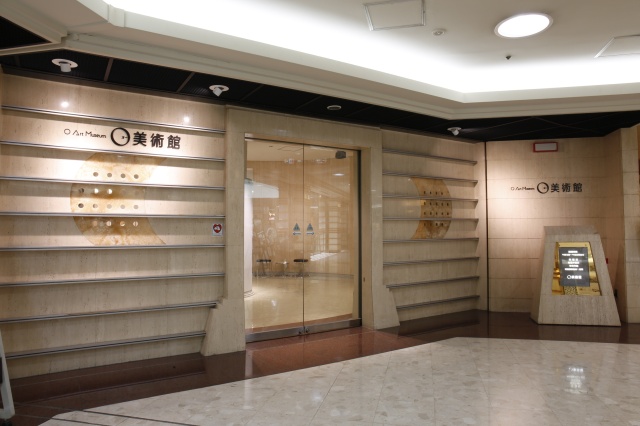
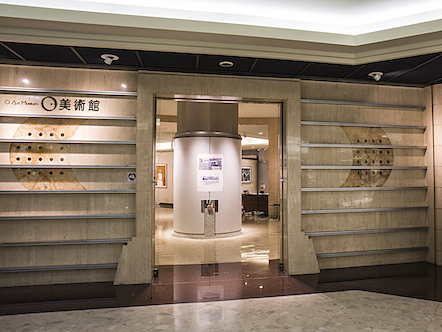
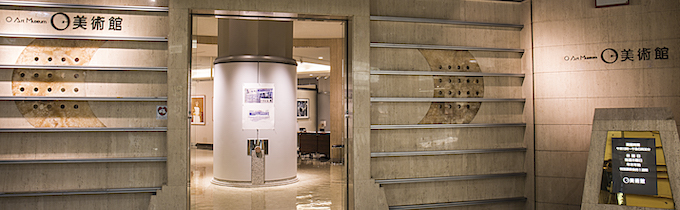
O Art Museum
Juridical Foundation Shinagawa Cultural Promotion Association
Organizer:
O Art Museum
Juridical Foundation Shinagawa Cultural Promotion Association
Colloquy:
Tadashi Shimada and Shigenobu Kimura from 2:00 p.m. - 4:00 p.m. Sunday,
May 13, 1990
Ohsaki New City
@
The first comprehensive retrospective in Tokyo of Makoto
Mikami (1919 - 1972), who was a renovator of the Japanese-style painting
after the War, and whose principle still means a lot to us today.
Makoto Mikami spent his childhood in Fukui City, and,
in 1944, graduated from the Japanese-style painting Division of Kyoto
Municipal School of Painting. Right after the defeat of Japan in the
War, he established PAN-REAL Art Association with young Japanese-style
painters, and held its first exhibition in 1949. The purposes of the
association were to resist the conventionalism of the Japanese-style
painting circles, to lay stress on social bearings, to reflect on the
basis of the Japanese-style painting as the art of glue and colors,
and to search for the widening expressive possibility. Mikami was active
as one of the central figures in the association.
But he had had consumption since his youth, and he had
a big operation in 1952, which obliged him to return to Fukui and forced
him to work alone living in the shadow of death.
With his preeminent skill of drawing already conspicuous
in his school days, and through influences from post-war Cubism and
Surrealism, Mikami tried to represent in his tensional works the turmoil
and hope in himself and in society surrounding him as in his work titled
gF City Mandalah. There with his own internal as well as physical scar
in the background, organic shapes sharply stick out in the space and
tangle with each other, which freeze into a profound mental image of
his. Since 1959 he introduced a variety of techniques in his works,
pasting ropes to a gypsum surface, trying frottage over a clever use
of wrinkled Tonoko Japanese paper. After that stage, he began to represent
a series of his own concept of the universe in gKyuten Mandala (Mandala
of effective spots for applying moxa), in which a human figure using
circles as its basic pattern, getting the idea from acupuncture and
moxa treatment he was undergoing. From 1969 he developed a new style,
somewhat mysterious and psychological picture in which dreamy female
figures appear abruptly in geometric shapes, but in 1972 he fell sick
again with pulmonary tubercurosis and died at the age of 52.
Realizing such a variety of expressions in his life,
Mikami constantly worked for the renaissance of media of the Japanese-style
painting keeping his eye on his self. Although his starting point was
very personal, his works were sublimed to a universal dimension of time
and space.
This exhibition is trying to give a full picture of
Mikami, showing more than 120 representative works of his, including
his drawings and objets that have not been publicized yet.
In regard to the Pan-real Art Association, a noteworthy
movement in the post-war history of art, O Art Museum has so far held
the exhibitions of the members, gRyonosuke Shimomurah and gHidetaka
Ohnoh. Along with them, this exhibition will give us an opportunity
to re-consider the future direction of the Japanese-style paintings,
and it is also an effort to re-evaluate Mikami in our eyes of today.
@
|
@ |